
Ambulance · EMS
Ready for the next call. Engine off.
Kraken already powers the charging hub on ambulances. Now that same system keeps the patient compartment climate-controlled, the meds cold and every monitor, radio and charger powered through posting, standby and hospital wall time, without idling the engine.
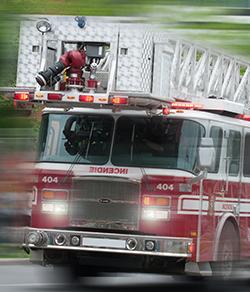
An idling ambulance burns fuel going nowhere.
Ambulances idle for hours: posted on a street corner, standing by at a fire or event, or waiting at the ED for a wall-time handoff. The engine runs because the patient compartment has to stay at temperature, the meds have to stay cold and the monitor, radios and chargers have to stay up. Every one of those hours adds fuel, engine hours and exhaust at the hospital door.
- A 2015 U.S. DOE fact sheet says ambulance engines are idled to maintain lighting, communications, computers, refrigeration for medication, life-support equipment, and heating and cooling. It lists ambulance idling at 1.5 gal/h and $1,000+/yr in added maintenance. Those are 2015 idle figures, not Kraken savings. DOE AFDC idling fact sheet (May 2015)
- The same fact sheet notes that idling outside emergency rooms wastes fuel and produces air pollution that can exacerbate respiratory or cardiovascular problems.
- DOE Clean Cities: emergency vehicles may idle for hours — sometimes for half or more of their operational time. DOE Clean Cities idling status (2015)
- California's commercial-vehicle idling rule exempts emergency vehicles. This page leads with cost, crew health and readiness, not with a claim that ambulance idling is illegal. CARB idling ATCM
The hub you already trust, now running the whole box.
- 1
Charge on every run and at the station.
The Kraken system charges from the chassis charging system while the ambulance drives, and from shoreline at the station, then stores the energy in a dedicated house battery bank. The chassis starting batteries stay separate.
- 2
Run the compartment engine-off.
When the crew posts, stands by or waits at the hospital, the engine goes off and Kraken carries the patient-compartment loads on 12 V and 120 V circuits: HVAC, medical refrigeration, monitor, defibrillator and mechanical CPR device charging, O2 concentrator, suction, radios, MDT and tablet charging, and compartment and scene lighting.
- 3
Protect the start.
The house bank is separate from the starter bank, so an engine-off standby is not drawn from the batteries the rig needs to roll.
- 4
Reduce the shoreline dash.
Devices on the hub stay charged on the road, which can reduce how often the crew has to unplug a station shoreline before rolling. Shoreline power is reduced, not replaced.
- 5
Sized to your rig and your shift.
Every system is sized by Kraken's engineering engine against the equipment you carry and the standby time you need to cover. Spec it in the builder and get a proposal and drawings.
NFPA 1917 has been consolidated into NFPA 1900 (2024). Ambulance requirements are now Chapters 28–34, including low-voltage electrical (Ch. 31), line-voltage electrical (Ch. 32) and line-voltage power source (Ch. 33). CAAS GVS V4.0 took effect 1 July 2025. KKK-A-1822F is no longer maintained by GSA, though some states still reference it. Kraken does not claim NFPA 1900, CAAS GVS, or KKK-A-1822F compliance. Compliance belongs to the finished ambulance and the final-stage manufacturer.
Better for the budget. Better for the crew.
For EMS agencies and fleet managers
- Idle hours on standby can become engine-off hours.
- Cleaner air at the hospital door while the crew hands off the patient.
- Kraken already ships as the ambulance charging hub. This is an extension of that system, not a named builder or agency program.
- Save a configuration in the builder and order it unit after unit.
For crews
- The compartment can stay warm or cool, and the meds cold, while you are posted.
- Write the chart at the hospital without the engine running next to you.
- Monitor, defibrillator, mechanical CPR device, stretcher battery, radios and ePCR tablet stay on charge.
- Less unplugging at the station, because shoreline charging is reduced rather than assumed away.
See it sized for your ambulance.
Enter the patient compartment loads and standby time. The builder sizes a system package for your unit and draws it.
What Kraken powers in the patient compartment
| Load | Typical circuit | Notes |
|---|---|---|
| Patient-compartment HVAC | 120 V AC | Usually the biggest standby load. |
| Medical refrigeration | 120 V AC | Meds and samples. |
| Monitor, defibrillator, CPR device and stretcher charging | 120 V AC | Charging docks. |
| Box and scene lights | 120 V AC | Compartment, scene and loading lights. |
| Radios, MDT and ePCR tablet charging | 12 V DC | On while posted. |
| Shore power inlet | — | Station shoreline to recharge and to run from building power. |
| O2 concentrator | 120 V AC | Add it if the rig carries one. |
| Suction | 120 V AC | Episodic. |
Every system is sized by Kraken's engineering engine against the equipment and standby time you enter. Actual capability depends on your configuration. Runtime, fuel savings, weight and noise are not published here.
Spec your ambulance system in minutes.
Pick Ambulance in the Kraken builder. The standby loads are pre-filled. Adjust them, and the engine sizes a Good / Better / Best package with drawings on a Type I ambulance side view.
Questions
Doesn't Kraken already go on ambulances?
Yes. Kraken already ships as the ambulance charging hub. This page is about sizing that system so it can also carry the patient compartment with the engine off.
How long can we stay posted with the engine off?
That depends on the rig, the equipment, the weather and how long you post. The builder sizes the system to the standby time you enter. A published runtime is not on this page.
Will it drain the chassis batteries?
The house bank is separate from the starting batteries.
How does it recharge?
From the chassis charging system while driving, and from shoreline at the station.
Isn't ambulance idling exempt from anti-idle laws?
Often, yes. California's commercial-vehicle rule exempts emergency vehicles. Agencies cut idling for fuel, maintenance, crew health and air quality at the hospital.
Does it meet NFPA 1900, CAAS GVS, or KKK-A-1822F?
Those standards apply to the finished ambulance, which the final-stage manufacturer certifies. Kraken does not claim that compliance.
How much fuel will we save?
A savings figure is not published. The DOE 1.5 gal/h idle figure (2015) is an idling rate, not Kraken savings.
What does it cost, and who installs it?
Pricing depends on configuration. Build your system online or talk to a Kraken rep.